What is the Hop Hop Hop trend?
Last updated:
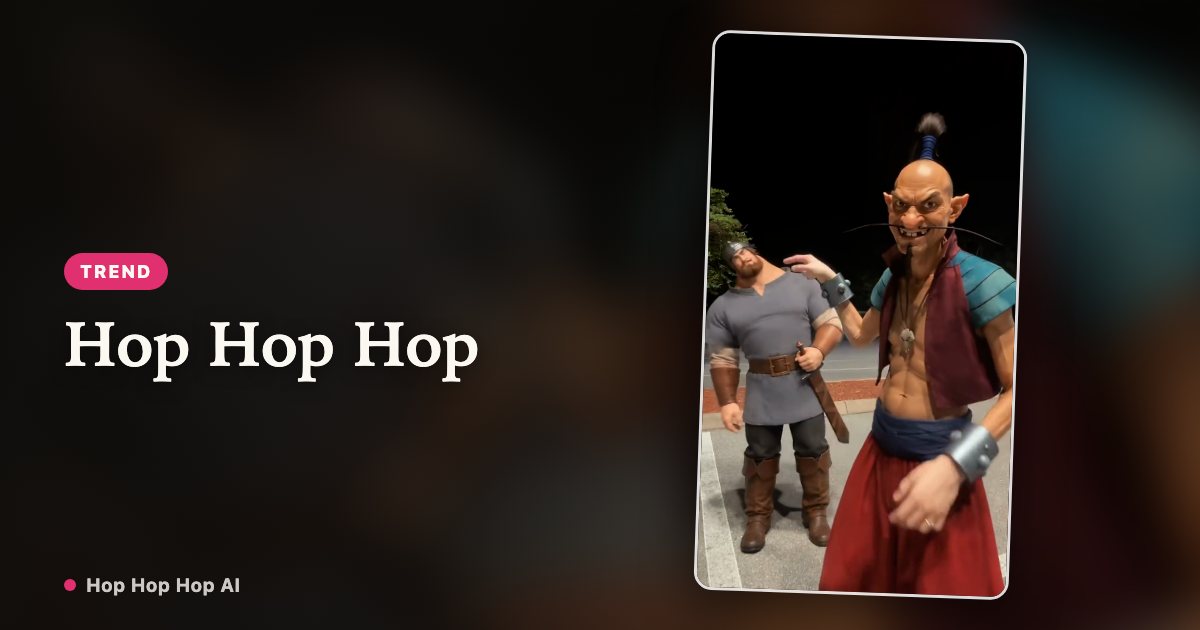
The Hop Hop Hop trend is a short, two-person TikTok dance built around a simple perspective trick. One person appears close to the camera, the other hops in the distance, and a hand gesture makes the distant performer look as though they are being pressed into the floor. A quick cut then swaps their positions. Here is what can be traced about its October 2026 rise, what viewers actually see, and three ways to try it.
Quick answer: what is the Hop Hop Hop dance trend?
Hop Hop Hop is a roughly eight-second, vertical, two-person routine sometimes called the Gabi trend or squash-and-swap dance. Its defining actions are a point toward the person behind, several hops on the beat, a flat-palmed pressing motion, a crouch that creates a miniature-person illusion, and a hard cut that swaps the performers. The camera usually stays fixed while the performers change positions.
This is not simply a slideshow, a photo morph, or a generic hopping filter. The joke depends on the space between the camera and the two people. The close performer appears huge; the far performer appears small. Keeping the gesture lined up makes the distant person seem to shrink without any expensive visual effects.
Where did it begin, and when did it become popular?
The clearest public timeline separates the soundtrack from the dance itself. Several dated trend archives trace a TikTok sound entry by @venadeaakira to September 24, 2026, used with a sketch edit. That is evidence of an early use of the audio, not proof that the artist invented the later two-person choreography. A sound can circulate for weeks before somebody turns it into a recognizable visual format.
The repeatable hop-and-squash version was visible by the week of October 18–24, 2026. On October 18, @gabilagaba posted a twin performance captioned “MY TRRENDD W TWIN.” Other creators followed with cosplay, friend, and AI-character variations over the next week. It is therefore more accurate to describe the movement as a mid-to-late October TikTok wave than to assert that a single account invented every part of it.
The video that helped define the format: @gabilagaba
The October 18 twin clip is one of the strongest early examples of the fully recognizable routine. The front performer indicates the person behind, the back performer hops, and their roles flip around the cut. Because the performers look alike, the visual reversal is immediately legible even when the viewer has never seen the meme before.
A historical October 30 snapshot published by multiple template guides reported approximately 3.7 million views for that post, with about 548,000 likes. Those are dated observations, not live counts or proof of total participation. The creator also posted a cosplay take later in October, showing how quickly a single routine could be reinterpreted with different characters.
A widely shared real-person example: @nirami1
On October 24, @nirami1 shared a version filmed with another person in a hallway. Its visual grammar is easy to read: one figure fills the foreground while the second remains much farther back, then a flat hand seems to push the distant person toward the ground. After the cut, the performers exchange places and the action reverses.
The post's caption credited inspiration from earlier creators, including Gabi. That credit chain helps distinguish a popular reinterpretation from the very first source of the dance. A roundup dated October 30 recorded roughly 1.4 million views for this version. Again, the number is only a historical snapshot and may have changed.
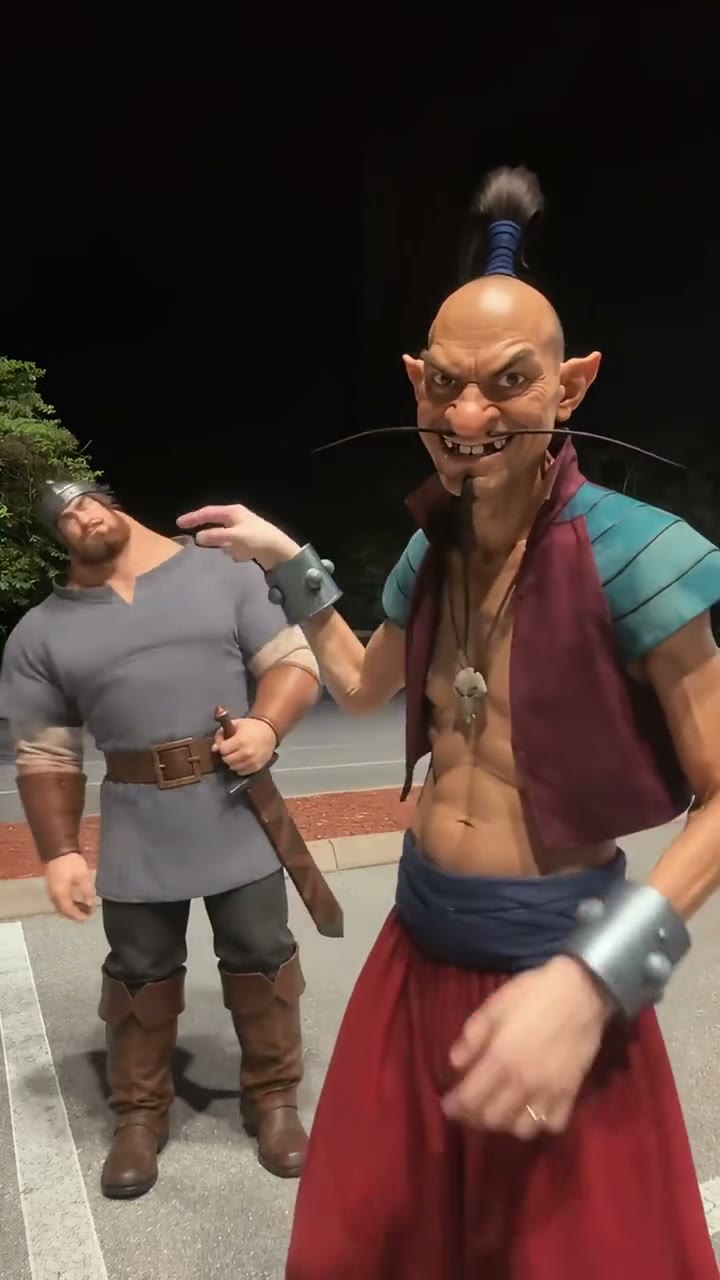
The AI-character version that expanded the idea
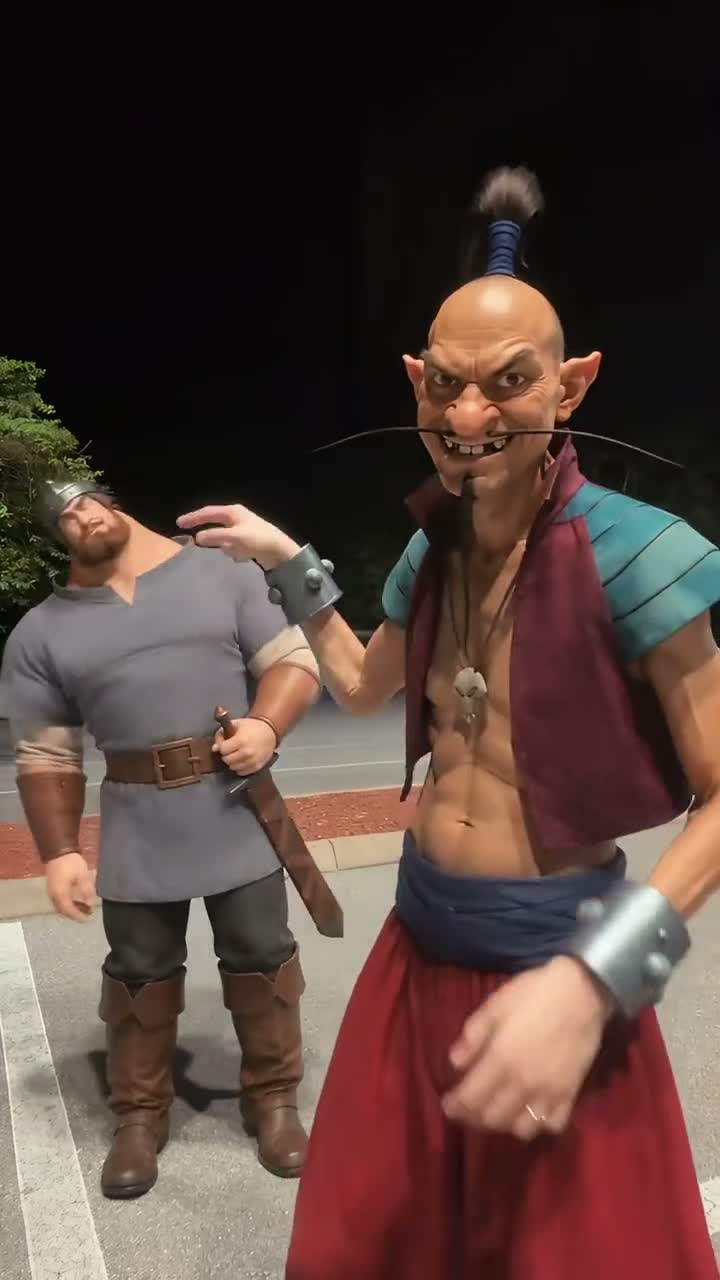
On October 25, @pouzato7 published an AI-made interpretation with two folk-tale characters in an outdoor night scene. It kept the essential point, hop, squash, and swap pattern but replaced the human performers with characters whose appearance suited a different visual story. This is why the trend also appears in searches for AI-generated meme videos.
An October 30 roundup recorded roughly 2.6 million views for the creator's post. It is useful evidence that viewers recognized the same dance even when the people and setting changed. It is not evidence that every tool can reproduce the timing perfectly, and the creator's video should never be presented as a verified output from a different generator.
How many Hop Hop Hop videos were made?
There is no verified, platform-wide public counter for just this one choreographed dance. Some October 29–30 trend trackers cited more than 100,000 uses of a related sound, while others reported a much smaller number of posts under the #hophophop hashtag. These numbers measure different things and may include unrelated clips. Adding them together would be misleading.
The choreography, beat by beat
The opening beat establishes who is large and who is small. Put performer A near the camera and performer B several steps away. A looks into the lens and points or gestures toward B. B starts hopping in place with enough vertical movement to be visible even at a small scale. Keep both people inside the phone's vertical frame.
Next comes the forced-perspective squash. A raises a flat hand between the lens and B's apparent head position, then moves it downward as B crouches. If the palm is too far from the projected head, the joke disappears; if the crouch happens before the hand moves, the motion looks disconnected. Timing and alignment sell the effect.
At the turning point, the editor cuts to a new take with the people at opposite distances. B now controls the foreground gesture while A hops in the background. The cut should feel intentional and rhythmic rather than like a smooth dissolve. The viral format is brief, so repetition and a clean role change make it recognizable.
What is the Hop Hop Hop song?
The linked TikTok sound has been identified in dated trend reports with an edited version of “Её парень” (“Her Boyfriend”) by Shluzov. Searchers sometimes describe it simply as the Russian “hop hop hop” song because the memorable hook is easier to recognize by sound than by the original title. The sound used in a specific creator's post may be an edit with a different speed.
Three ways to join the trend
Option 1: film with a friend. Use a phone on a stable support, mark a near and far position, record the pointing and hopping segment, then switch places for the second shot. This is the most faithful choice if you want actual people doing the exact motions. It takes coordination but gives you full control over the expressions and hand placement.
Option 2: use a video-editing template. Shoot the movement yourself, trim the takes in a mobile editor and align the hard cut to the sound. A template may speed up cutting or captioning, but it does not automatically put your face into someone else's performance. Check whether a template is for video clips, still images, or a true AI effect before uploading.
Option 3: create an AI dance video from photos. On HopHopHopAI, upload one clear photo for a same-person variation or two consented adult photos for a duo, choose an available duration and generate an MP4. This avoids filming, but the result is model-generated, so it may differ from the creator reference. Check the preview carefully before sharing.
Is the Hop Hop Hop AI filter the same thing?
Not necessarily. People use the phrase “Hop Hop Hop AI filter” for a video effect, a CapCut-style template, a browser generator, or even a manually edited clip. There is no evidence that these labels describe one official, universal TikTok filter. The name points to the end result more often than it identifies the software behind it.
A face filter can alter a live selfie without choreographing a second performer. A transition template can switch between two shots without creating new movement. An image-to-video generator synthesizes movement from photos, which means it must handle faces, bodies, swapping positions and the timing of the cut.
Why does this short dance work so well on video?
The first frame immediately presents a size contrast. The next seconds turn that contrast into a simple physical gag, and the sudden reversal gives the viewer a reason to watch until the end. You can understand the premise with the sound off; the beat simply makes the movement sharper and more shareable.
How to make a version worth sharing
Choose the format before collecting images. A two-person recreation needs permission from both people. A one-photo AI version is simpler but may repeat the same appearance in both roles. If you want visual consistency, provide sharp, well-lit faces and unobstructed upper bodies; heavy filters and cropped heads make identification harder.
When publishing a realistic AI-generated version, label it as AI content. TikTok's support policy explicitly treats a generated portrayal of a person doing something they never did, such as dancing, as relevant AI-generated content. Do not use a private person's image without consent, and credit other creators when discussing their reference footage.
Frequently asked questions
Who started the Hop Hop Hop TikTok dance?
The early soundtrack use is linked to @venadeaakira on September 24, 2026. The recognizable twin squash-and-swap routine was shared by @gabilagaba on October 18. Because earlier unpublished or inaccessible posts may exist, neither link proves a single definitive inventor.
When did the Hop Hop Hop trend go viral?
The best-supported dance wave is the week of October 18–25, 2026, with examples spreading from a twin routine into cosplay, friend and AI-character versions. The underlying sound circulated earlier.
Is there an official Hop Hop Hop AI filter on TikTok?
The phrase is used loosely. A built-in effect, editing template and photo-to-video AI generator are different tools. Check the exact product or effect name before assuming one tap will reproduce the entire dance.
How many TikTok videos use the dance?
No independently verified count of this exact choreography is available. Hashtag counts and sound-use counts are not the same thing and may include unrelated posts. This article documents several dated original examples rather than inventing a precise total.
Can I make the Hop Hop Hop dance with one photo?
Yes, a photo-to-video generator may use one adult photo for a same-person version or two authorized photos for a duo. Video results vary; review likeness and movement before publishing, and label realistic AI-generated media.
Sources and original posts
Creator clips belong to their original authors. Third-party viewing figures are dated observations rather than real-time measurements.
- @venadeaakira · sound-linked video · Sep 24, 2026
- @gabilagaba · original twin dance · Oct 18, 2026
- @nirami1 · hallway dance · Oct 24, 2026
- @pouzato7 · AI character version · Oct 25, 2026
- MakeViral · dated timeline and historical engagement snapshots
- RemakeYourMeme · additional dated creator examples
- TikTok Help Center · AI-generated content and labeling
Your Hop Hop Hop moment is one photo away
Create my video